
09 Sep
Labrador Retriever Dog Breed Guide: Temperament, Price in India and Care Tips
Ask any Indian pet parent to name a dog breed, and there is a good chance the answer is Labrador. Friendly, food-driven, and endlessly patient with children, Labradors have been the most popular breed in Indian homes for years. If you are thinking of bringing one home, or already sharing your house with a Lab, here is everything worth knowing, from temperament and price to daily care.
Labrador Retriever: Quick Overview
| Trait | Details |
| Origin | Newfoundland, Canada |
| Colours | Black, Yellow, Chocolate |
| Height | Male: 56-57 cm, Female: 54-56 cm |
| Weight | Male: 29-36 kg, Female: 25-32 kg |
| Life expectancy | 10-14 years |
| Price in India | INR 15,000 - INR 80,000 |
| Best for | Families, first-time owners, apartments and houses |
Origin and History
Labrador Retrievers trace back to Newfoundland, Canada, where their ancestor, the St. John's water dog, helped local fishermen retrieve nets and catch fish that slipped free in cold water. English aristocrats brought the breed to Britain in the 1800s, where it was refined into the Labrador Retriever recognised today. The American Kennel Club registered the breed in 1917, and it has topped popularity charts in the US, UK, and India ever since.
Appearance and Colours
Labradors have a short, dense, water-resistant double coat built for cold-water work. The breed comes in three recognised colours: black, yellow (ranging from pale cream to fox-red), and chocolate. Despite what some sellers claim, silver is not a genuine Labrador colour.
Both the AKC and the Kennel Club of India recognise only the three standard colours, and a silver coat usually points to crossbreeding rather than a purebred Lab. Males stand 56-57 cm tall and weigh 29-36 kg, while females are slightly smaller.
Temperament
Labradors are gentle, outgoing, and eager to please, which is exactly why they make such reliable family dogs. They are patient with children, sociable with strangers, and rarely show aggression when raised and socialised well.
Their one real quirk is that they stay mouthy well into adulthood and will chew anything left within reach, so puppy-proofing your home matters more with this breed than most.
Labrador Price in India
Price depends mainly on registration status and breeder reputation, not on coat colour.
| Type | Price Range (INR) |
| Pet-quality (unregistered) | 15,000 - 30,000 |
| KCI-registered | 30,000 - 55,000 |
| Show-quality, champion bloodline | 55,000 - 80,500 |
Prices tend to run higher in metro cities than in smaller towns. Before paying anything, ask to see the parents' health clearances and KCI registration papers. A lower price with no documentation is rarely a saving in the long run.
Feeding and Diet
Puppies need 3-4 small meals a day up to six months of age, tapering to two meals daily as adults. Because Labradors are a large breed, a diet formulated for large-breed growth in the puppy stage helps protect developing joints.
Adult Labs typically eat 2-3 cups of good quality dry food a day, split into two meals. Labradors are famously food-motivated and prone to overeating, so measured portions matter more than free feeding.
Exercise Needs
Labs need at least 45-60 minutes of exercise daily, split between walks and active play such as fetch or swimming, which most of them genuinely love. An under-exercised Labrador is far more likely to become destructive indoors or put on excess weight, which adds strain on the joints.
Their easy-going nature also makes travelling with a Labrador easier than with most breeds, whether it's a car ride or a longer trip, as long as crate training starts early.
Grooming and Shedding
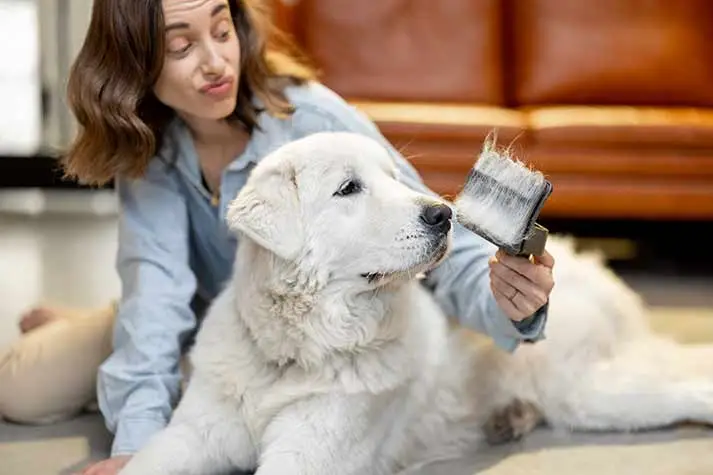
Weekly brushing is enough for most of the year, but Labradors shed heavily during two coat-blow seasons annually, and brushing 3 to 4 times a week during those weeks keeps loose fur under control. Bathing every 6 to 8 weeks is sufficient. Bathing more often than that strips the coat of its natural, weather-resistant oils.
Common Health Issues in Labradors
A few genetic tendencies are worth watching for so problems get caught early:
- Hip and elbow dysplasia
- Obesity-related joint stress
- Ear infections from their floppy ears, especially after swimming
- Exercise-induced collapse, a rare neuromuscular condition seen mostly in field-bred lines
Regular vet check-ups and keeping your Lab at a healthy weight prevent most of these from becoming serious.
Are Labradors Good for Indian Homes?
Yes, on most counts. Their short coat handles Indian summers reasonably well, though peak heat still calls for shade, water, and skipping midday walks. They adapt to apartment living if exercised properly, though a home with some outdoor space suits their energy levels even better.
FREQUENTLY ASKED QUESTIONS &
What is the price of a Labrador puppy in India?
A Labrador puppy in India typically costs between INR 15,000 and INR 80,000, depending on registration status, bloodline, and breeder reputation. KCI-registered puppies from verified breeders usually fall between INR 30,000 and INR 55,000.
How long do Labradors live?
Labrador Retrievers typically live 10 to 14 years when given a proper diet, regular exercise, and routine veterinary care.
Are Labradors good with children?
Yes. Labradors are among the most child-friendly breeds, known for their patience and gentle nature, though play between toddlers and boisterous puppies should always be supervised.
Do Labradors shed a lot?
Labradors shed year-round and heavily during two seasonal coat-blow periods each year. Regular brushing keeps shedding manageable indoors.
Are Labradors easy to train?
Very. Labradors are intelligent and eager to please, which makes them one of the easiest breeds for first-time dog owners to train using positive reinforcement.



AUTHOR’S BIO
Carry My Pet
Passionate pet enthusiasts and globetrotters, dedicated to easing furry friends' journeys worldwide. Penning tales of compassion at CarryMyPet, where every relocation is a tail-wagging adventure.