11 May
What is Crate Training and Why is it Necessary for Pet Travel?
Relocating a pet is no easy task. Pets are a part of the family unit, and their safety in transit must be guaranteed before any sort of travelling occurs. For these reasons, pets are only allowed to fly or travel by train in an IATA-approved pet travel crate that meets airline safety regulations.
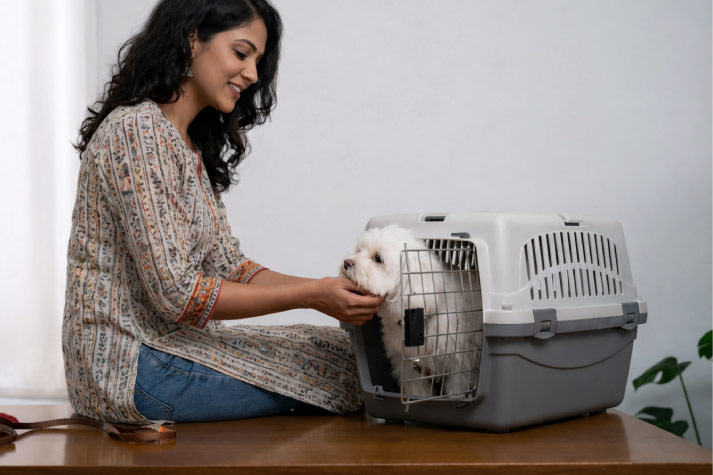
Crate training is like any form of obedience training; it is the simple practice of familiarizing a pet with their crate so they remain calm and comfortable while travelling in it. This is a simple practice, but one which requires consistent effort and daily reinforcement. It helps in cases of emergency, training, visitors at home, and travel.
While it is useful to crate train your pet at home to make some of these situations easier to manage, such training is crucial before pet travel. A pet who lacks crate training may become restless, bark excessively, injure themselves trying to escape, or suffer from separation anxiety during travel, all of which can compromise their safety and comfort during relocation.
Why is Crate Training a Pet Important?
Crate training has several benefits and serves to ease your pet's travel experience once your pet is used to it. Here are a few of them.
- A crate provides an easier and safer travel experience; it can be used for journeys by road, rail, air, and visits to vet clinics.
- A crate can provide a sense of security, and a safer place to rest/to be left alone during stressful, overwhelming, and tiresome times for pets.
- A crate is useful during house training as bowel and bladder control can be taught without making a mess around the house.
- A crate is useful if you’re ever in a situation where you need to evacuate with your pet quickly.
- A crate is useful if your pet is restless or destructive with furniture, upholstery, etc.
How Should I Choose a Pet Crate?
Before purchasing a pet crate, you should first consider a few other factors. A crate is chosen based on your pet’s age, size, and breed. The crate itself should be large enough for your pet to comfortably stand up, turn around, sit, and lie down. If you have a younger pet who is still growing, consider opting for a larger crate to account for their potential size or choose a crate when they’ve fully grown.
Familiarizing Your Pet With their Crate
Your pet will not enter the crate and be comfortable in it of their own accord, they will need to be trained to do so. This is where the training part comes in.
- Place the crate in a familiar space - When introducing your pet to the crate, keep it around an area your pet is familiar with or frequently spends time in. You can incentivize interaction with the crate by leaving treats and toys in and around the crate. Do not force your pet inside the crate. Let them explore and check it out for themselves.
- Add familiar scents - As they gradually become familiar with the presence of the crate, you can start putting a favoured blanket or item of clothing inside the crate, so your pet slowly comes to associate the crate with a familiar environment. Eventually, your pet will come to see the crate as a familiar, safe space and begin interacting with it without any issues.
- Begin feeding inside the crate - At this point, you can start feeding your pet while they are inside its crate, thus continuing the familiarity process that will ease its eventual journey. If your pet only interacts with the entrance of the crate and not the insides, try to slowly move their food further and further inside until they are comfortable being inside their crate.
- Introduce short door closures - Once your pet is eating inside the crate comfortably, you can try closing the door for small durations to accustom your pet to the experience. For the first few times, let them out as soon as they are done eating. After they are comfortable, you can slowly increase the duration you let them stay inside. Eventually, your pet should not mind being in its crate while you run an errand or tend to dog-allergic house guests.
- Practice travel simulation - It is important to get your pet used to travelling in a crate prior to traveling too. Before making a big trip, take your pet out for shorter drives so they can get used to the sensation of travelling in a crate and become comfortable travelling in it. Carry their favourite toys and treats and sit in a stationary car so they can relax without the stress of travelling.
What Not to Do During Crate Training
It is important to remember that any form of learned behaviour is a gradual process, and efforts to speed it up will likely do more harm than good. Here are a few things you shouldn’t do during the training process.
- Do not push or shove your pet forcefully into the crate. Let them take their time with the crate and become comfortable with it on their own.
- Crate training is a helpful skill that can make travelling with a pet a lot easier. However, it should not be used as punishment or as an excuse for neglect. Do not rush the process, you will be better off with slower and comfier steps.
- Do not leave your pet alone in their crate for long durations, especially when you are training them. Incorrect training can be detrimental in the long term, and doing so can cause further issues like caged-dog syndrome, wherein dogs demonstrate anxiety, depression, or aggression because of a lack of human interaction and spending long hours alone in a crate.
Ultimately, the key to successful crate training is your patience. Be careful while crate training your pet and do not make them feel imprisoned in the crate. Pet parents must make sure that their pets do not associate a crate with fear, sadness, or separation. Patience is key, and you’ll find that if you’re willing to put in the time, effort, and a little bit of patience, the results are worth it.
FREQUENTLY ASKED QUESTIONS &
Is crate training cruel?
No, when done properly. Crate training mimics a den-like environment that many animals naturally find comforting. It becomes harmful only if used as punishment or for prolonged confinement.
Is crate training necessary for flights?
Yes. Most airlines require pets to travel in IATA-compliant crates for safety reasons. A pet unfamiliar with a crate may experience panic, stress, or injury during transit.
Can crate training reduce separation anxiety?
Yes, when done correctly. If a crate is associated with comfort and safety, it can help reduce anxiety during short absences. However, it should never replace regular interaction and bonding time.
What size crate is best for air travel?
The crate must allow your pet to stand, turn around, sit, and lie down comfortably. Airlines may deny boarding if the crate is too small or does not meet IATA regulations.
Should I put water inside the crate during travel?
Yes. Most airlines require attached water bowls that are accessible from outside the crate. Proper hydration is essential, especially during long journeys.



AUTHOR’S BIO
Carry My Pet
Passionate pet enthusiasts and globetrotters, dedicated to easing furry friends' journeys worldwide. Penning tales of compassion at CarryMyPet, where every relocation is a tail-wagging adventure.