06 Aug
The Complete Puppy Care Guide: Feeding, Training, Vaccination, Puppy-Proofing and More
The first few months with a puppy are full of unforgettable moments, but they're also when your puppy learns the habits that will last a lifetime. Knowing what to feed, when to vaccinate, how to potty train, and how to keep your home safe can make those early weeks much less stressful.
Whether you're bringing home your first puppy or simply need a refresher, this article covers every essential step, from feeding and training to vaccinations, puppy-proofing, and everyday care.
What Should You Buy Before Bringing Your Puppy Home?
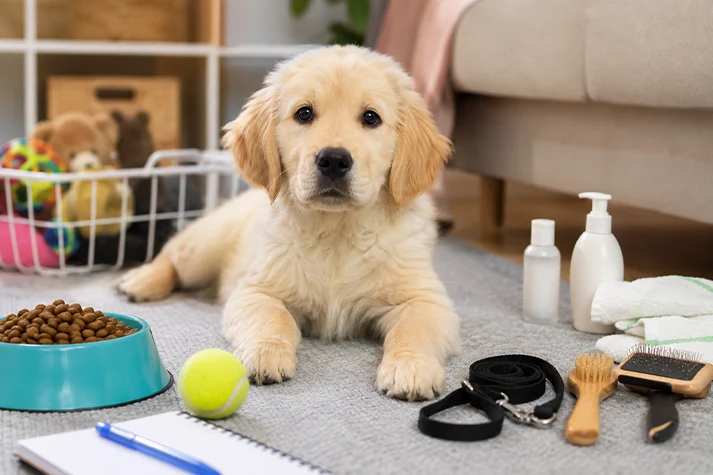
Before your puppy arrives, having the essentials ready will help them settle into their new home more comfortably. Here's a basic checklist to get you started:
- Food and water bowls
- Age-appropriate puppy food
- A comfortable bed or sleeping mat
- A collar or harness with a leash
- An ID tag with your contact details
- A pet microchip for permanent identification
- Safe chew toys for teething
- Basic grooming essentials, such as a brush, pet shampoo, and nail clippers
- Poop bags and an enzyme-based cleaner for easy clean-up after accidents
- A properly sized crate if you plan to crate train
Having these essentials in place before your puppy comes home will make the first few days less stressful for both of you.
How Often Should You Feed a Puppy?
A puppy's feeding schedule changes as they grow. Younger puppies have smaller stomachs and higher energy needs, so they need more frequent, smaller meals. Always choose a food formulated specifically for puppies, as it contains the nutrients needed to support healthy growth and development.
| Age | Meals per day |
| 6 to 12 weeks | 3 to 4 |
| 3 to 6 months | 3 |
| 6 to 12 months | 2 |
| 12 months and older | 2 |
Most puppies can move to adult food once they reach about 80 percent of their expected adult size. Small breeds usually get there by 10 to 12 months, while large breeds can take up to 24 months. If your puppy is losing weight, seems overly hungry all the time, or is gaining weight too fast, check in with your vet rather than guessing at portions.
How Do You Potty Train a Puppy?
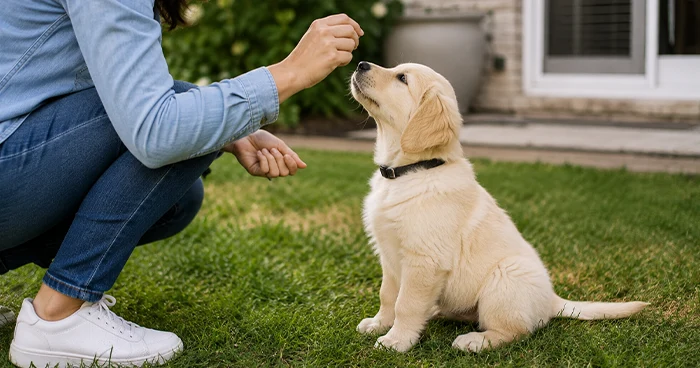
Potty training works best when it starts on day one, not after a few accidents. The idea is simple: take your puppy out often enough that they rarely get the chance to go inside.
- Take your puppy outside first thing in the morning, after meals, after naps, and after play.
- Use the same spot and a simple cue word every time, like "go potty."
- Reward them the moment they finish, not after you're back inside.
- Clean up any indoor accidents with an enzyme cleaner so the smell doesn't pull them back to the same spot.
Most puppies are reliably house trained within 4 to 6 months, though smaller breeds sometimes take a little longer. If accidents are still frequent past 6 months, it's worth ruling out a medical cause with your vet.
Why Do Puppies Bite So Much, and How Do You Stop It?
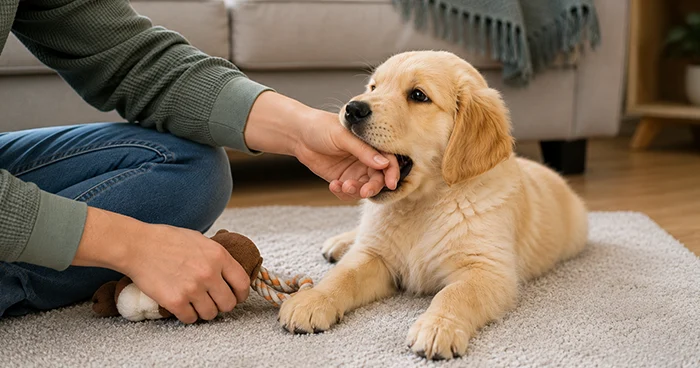
Puppies explore the world with their mouths, so nipping during play is normal, not a sign of aggression. That said, early training is important to prevent nipping from turning into a habit and to stop destructive chewing as your puppy grows.
- When your puppy bites too hard, let out a short "ow" and stop playing for a moment. This teaches them that biting ends the fun.
- Keep chew toys nearby and redirect their mouth to a toy instead of your hand.
- Avoid rough hand-wrestling games, since they encourage biting as play.
- Puppies who are overtired bite more, so a nap can calm things down faster than a training session.
Biting usually settles down once teething ends, around 6 months. If it's paired with growling, stiff body language, or biting that draws blood, talk to a trainer rather than waiting it out.
Why Is Puppy Socialisation So Important?
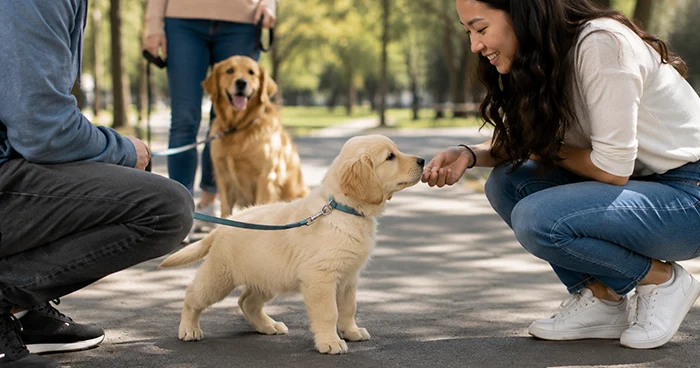
The first few months of your puppy's life are the best time to introduce them to new people, friendly dogs, different sounds, places, and everyday experiences. Positive socialisation helps build confidence and reduces the risk of fear-based behaviours later in life. Keep each new experience calm, gradual, and rewarding, and avoid crowded public areas until your puppy has completed their core vaccinations.
What Is the Puppy Vaccination Schedule in India?
India has a real risk profile that a global puppy guide won't cover. Diseases like parvovirus and rabies are still common, and rabies vaccination is legally required. Here's a puppy vaccination schedule that most veterinarians in India recommend following.
| Age | Vaccine |
| 6 to 8 weeks | DHPPi (Distemper, Hepatitis, Parvovirus, Parainfluenza) |
| 10 to 12 weeks | DHPPi booster, Leptospirosis |
| 14 to 16 weeks | DHPPi booster, Leptospirosis booster, Rabies |
| Annually | All core boosters |
Missing a dose doesn't mean starting over, but it does leave a gap where your puppy is unprotected, so stick to your vet's schedule as closely as possible. Your puppy shouldn't visit parks, join group walks, or stay at boarding facilities until they've completed their core vaccination series, usually around 16 weeks of age. During this time, avoid areas frequented by unknown or unvaccinated dogs, as viruses like parvovirus can survive in the environment for months.
This is also the point where your puppy's health records become important if you plan to travel. Depending on the destination, airlines and countries may require proof of completed vaccinations, a pet microchip, and a rabies titer test before your pet can travel internationally.
When Should You Deworm a Puppy?
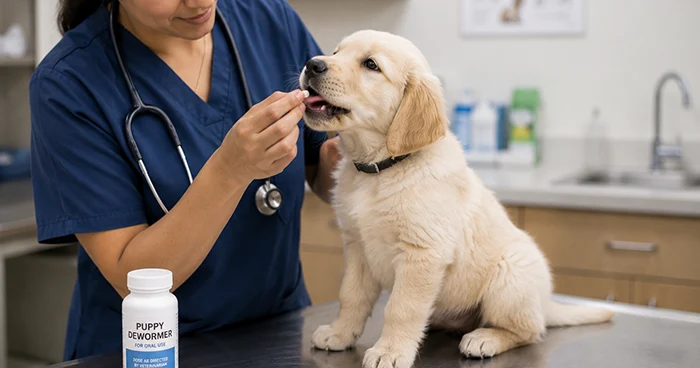
Puppies are commonly born with intestinal worms or can pick them up early in life, so regular deworming is an important part of their healthcare. Most vets recommend starting deworming at around two weeks of age and repeating it at regular intervals during the first few months. Your veterinarian will recommend the right schedule based on your puppy's age, weight, and overall health.
When Should You Spay or Neuter Your Puppy?
Most vets recommend spaying or neutering between 6 and 9 months, though this can shift depending on breed size. Large breeds sometimes benefit from waiting a little longer, since early surgery can affect joint development. Costs in India typically range from INR 2,000 to INR 8,000 depending on the clinic and the puppy's size. Talk to your vet about timing rather than following a fixed rule, since health and breed matter more than age alone.
How Do You Puppy-Proof Your Home?
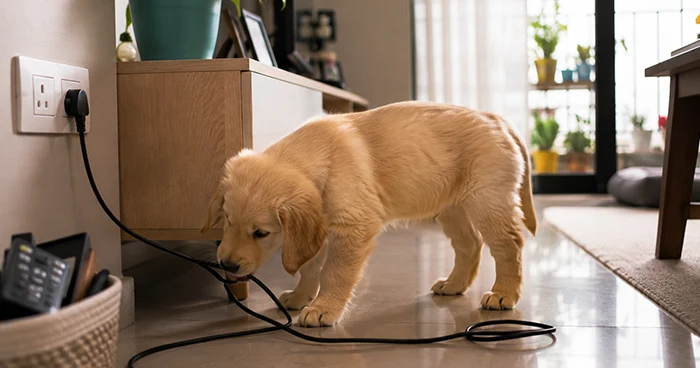
Puppies chew, sniff, and swallow things they shouldn't, so proofing your home before they arrive saves a lot of stress later.
- Kitchen: Keep chocolate, onions, grapes, and xylitol-sweetened items completely out of reach.
- Living room: Tuck away wires, remotes, and small objects that could be swallowed.
- Balcony: A common hazard in Indian homes, make sure railings and gaps are puppy-proof before letting them out unsupervised.
- Bathroom: Store cleaning supplies and medications in closed cabinets, not open shelves.
A short walkthrough of each room, at puppy height, catches most hazards before they become emergencies. Don't forget to secure electrical cords, cover low power sockets where necessary, keep houseplants out of reach, and store human medicines in locked cabinets.
Looking at your home from your puppy's eye level often reveals hazards that are easy to miss.
How Do You Introduce a Puppy to an Older Dog?
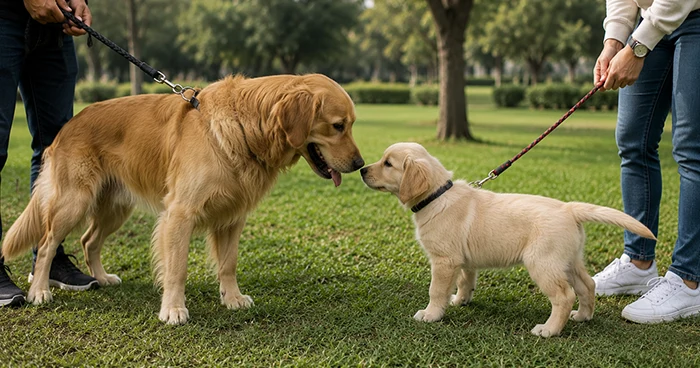
First meetings go more smoothly on neutral ground, like a park, rather than inside your home where the older dog may feel territorial.
Keep both dogs on a leash, let them sniff briefly, and watch their body language closely. Signs it's going well include relaxed tails and playful posture. Signs to slow down include stiff bodies, growling, or one dog constantly avoiding the other. Give the older dog their own space, their own bowls, and one-on-one time with you, so they don't feel replaced.
Conclusion
Raising a puppy isn't about getting everything perfect from day one. With patience, consistency, proper nutrition, regular veterinary care, and plenty of positive training, your puppy will grow into a happy, healthy companion. As they grow, their needs will change too, so continue learning and adapting your routine to give them the best possible care at every stage of life.
FREQUENTLY ASKED QUESTIONS &
How much sleep does a puppy need each day?
Puppies sleep 18 to 20 hours a day in the first few months. This is when most of their physical growth and brain development happens, so let them nap freely between play sessions.
How much exercise does a puppy need?
Exercise needs vary depending on your puppy's age, breed, and health. Short walks, supervised play, and regular mental stimulation are generally better than long or high-impact exercise sessions while your puppy is still growing.
When is a puppy's first vet visit, and what happens?
The first visit should happen within 48 to 72 hours of bringing your puppy home. The vet checks overall health, begins the vaccination schedule, and screens for parasites.
How long can you leave a puppy home alone?
A rough guide is one hour per month of age, up to a maximum of 6 to 8 hours. Leaving a young puppy alone longer than that regularly leads to accidents and stress.
When does a puppy become an adult dog?
Small breeds reach adulthood around 8 to 12 months, medium breeds around 12 months, and large or giant breeds can take 18 to 24 months. This is also when feeding and exercise routines shift from puppy to adult levels.
When can puppies go outside?
Most veterinarians recommend waiting until your puppy has completed their core vaccination series, usually around 16 weeks of age, before visiting public parks or areas frequented by other dogs. Until then, safe socialisation can happen at home or with fully vaccinated pets.



AUTHOR’S BIO
Carry My Pet
Passionate pet enthusiasts and globetrotters, dedicated to easing furry friends' journeys worldwide. Penning tales of compassion at CarryMyPet, where every relocation is a tail-wagging adventure.